Does Your Period Underwear Manufacturer Meet Quality Standards?
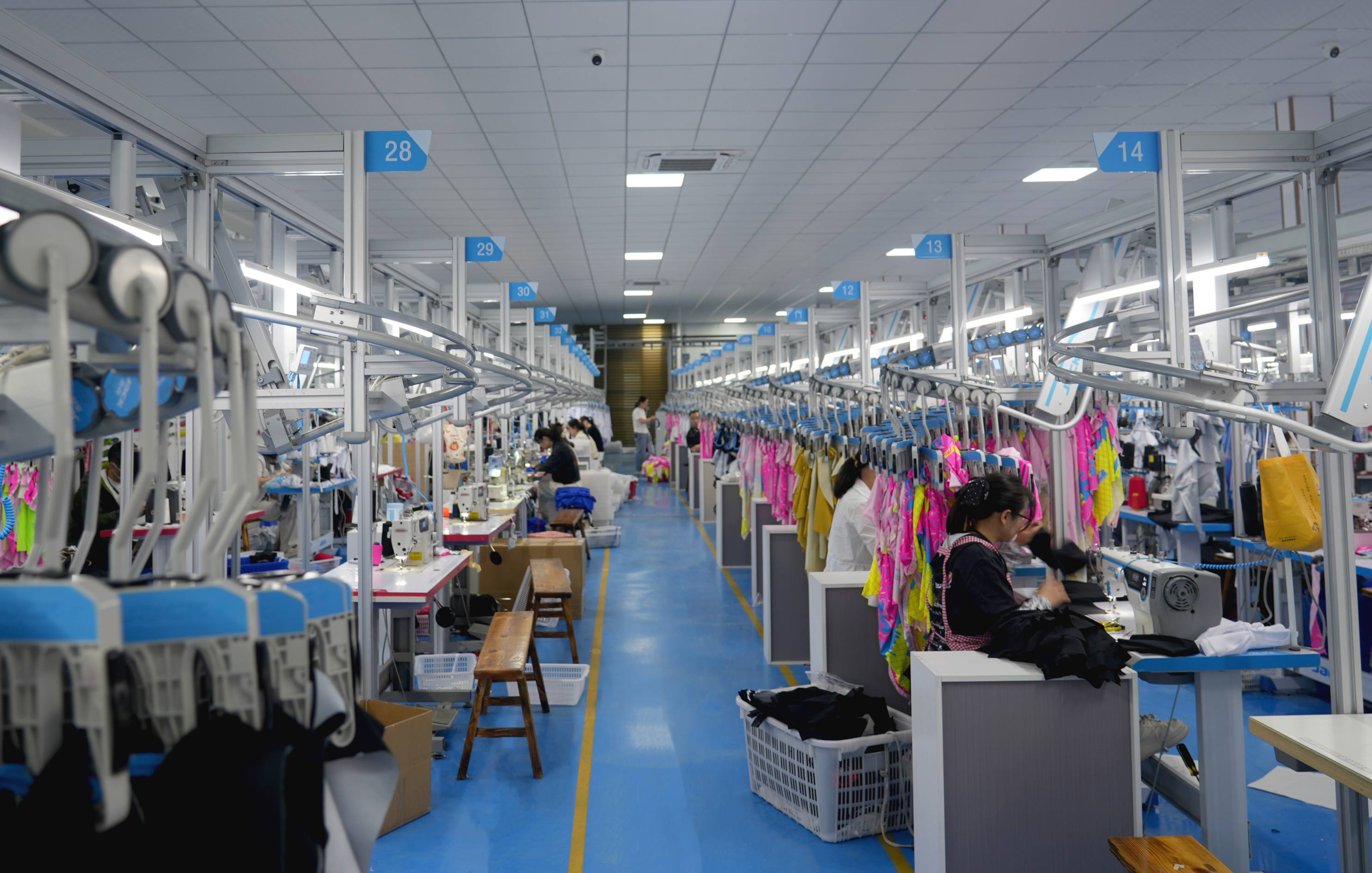
A period underwear manufacturer should be judged by measurable performance, material safety, wash durability, production consistency, and traceable inspection records—not by sample appearance alone. For a 10,000-piece order, a 2% defect rate already creates 200 questionable units before returns are counted. Buyers should define absorption capacity, rewet, leakage resistance, shrinkage, seam strength, colorfastness, and chemical requirements before production. ISO 9001 procedures can support process consistency, while OEKO-TEX STANDARD 100 is commonly used for harmful-substance testing in skin-contact textiles. A supplier should be able to connect every approved specification with a repeatable test, inspection record, and material lot.
Period underwear combines several materials that must work together under moisture, pressure, stretching, detergent, and repeated washing. A typical construction may contain 3–5 functional layers: a moisture-transfer surface, one or more absorbent fabrics, a liquid-resistant membrane, and the outer fabric. A failure in one layer can reduce the performance of the complete garment even when the other materials meet specification.
That makes the approved product specification more useful than a statement such as “high absorbency.” If a purchase order contains 20,000 pieces and finished measurements vary by only 3%, waist and leg openings can already feel different across sizes. Specifications should state fabric composition, GSM, layer structure, garment dimensions, tolerances, absorption target, wash conditions, sewing method, elastic recovery, labeling, and packaging before cutting begins.
A performance claim without a fixed test condition is difficult to compare between factories. “Absorbs 30 mL” becomes useful only when the test liquid, application rate, sample condition, pressure, temperature, test area, and pass/fail rule are also defined.
Absorption capacity needs more than one measurement because menstrual fluid does not enter a garment as a single controlled pour. A factory may report a 40 mL maximum capacity, while the wearer experiences surface wetness much earlier if the top layer transfers moisture slowly. Testing should separate total retention from acquisition speed, spreading, surface rewet, and leakage under pressure.
A practical development program can compare at least 5 samples from the same style before approval rather than relying on one hand-picked piece. If five garments record 41, 40, 22, 39, and 42 mL, the 22 mL result matters even though the average remains acceptable. Production consistency should therefore be reviewed together with the average result.
The same approach applies to liquid resistance. A waterproof or leak-resistant membrane may work well as unused roll material but lose performance after cutting, sewing, heat exposure, stretching, or repeated laundering. Needle holes, gusset edges, bonding areas, and membrane creases deserve separate inspection because leakage can begin locally rather than across the full panel.
| Area checked | What the manufacturer should record | Example production requirement |
|---|---|---|
| Absorbent section | Capacity, acquisition time, rewet | 5 samples per test lot |
| Barrier layer | Water-resistance result, surface damage | 100% visual inspection before cutting |
| Finished size | Waist, hip, rise, gusset position | Tolerance agreed in millimeters or % |
| Washing | Shrinkage, seam condition, layer separation | Compare before and after 20–30 cycles |
| Sewing | Open seams, skipped stitches, panel alignment | Recorded during in-line inspection |
| Materials | Supplier, lot number, composition | Traceable to each production batch |
Wash testing then shows whether the original test result survives normal ownership. A reusable garment sold for regular monthly use may be washed dozens of times per year, so testing only an unused sample leaves a large information gap. A brand can set checkpoints at 5, 10, 20, and 30 wash cycles and compare measurements, absorption, leakage resistance, elastic recovery, pilling, seam condition, and delamination at each stage.
Dimensional change also affects function, not only fit. If the outer fabric shrinks 5% while an internal layer changes by 1%, the mismatch may produce puckering, twisting, or uneven tension around the gusset. A manufacturer should test the assembled garment under the same wash and drying instructions printed on the care label rather than using easier factory conditions.
Material chemistry needs the same level of documentation because underwear remains in prolonged contact with skin. OEKO-TEX STANDARD 100 uses four product classes, with Product Class 2 covering products with direct skin contact such as underwear. Certification can support supplier assessment, but the certificate number, scope, validity period, certified materials, and manufacturing location still need to match the goods being purchased.
PFAS deserves separate attention when period underwear is sold in markets with textile restrictions. California's AB 1817 restrictions on regulated PFAS in new textile articles took effect on January 1, 2025, with specified exceptions for certain severe-wet-condition outdoor apparel. A buyer selling into regulated markets should therefore request current material declarations and suitable laboratory reports rather than accepting an undated “PFAS-free” statement.
Chemical documentation should be tied to actual material lots whenever possible. If the test report covers a black polyester fabric supplied in 2024 but the current order uses a new 2026 dye lot, the old report does not automatically describe the new material. Buyers should compare supplier name, fabric reference, color, composition, report date, test method, and lot information before accepting the document.
Fabric identity also needs attention because small composition changes can alter stretch, drying, hand feel, and long-term recovery. In the United States, textile labeling rules generally require fiber-content information, and fiber percentages should match the finished product being sold. A nominal composition such as 95% cotton and 5% elastane should therefore be checked against supplier documentation rather than copied from an earlier style.
Once materials are approved, incoming inspection should prevent unsuitable rolls from entering production. A factory can check fabric width, GSM, shade, visible defects, stretch, recovery, lamination quality, membrane condition, absorbent-layer weight, and accessory specifications. For a 6,000-piece batch, detecting a wrong laminate before cutting may prevent thousands of garments from requiring rework.
A manufacturer also needs a written rule for material substitutions. A fabric that looks nearly identical can behave differently after 30 wash cycles or when exposed to fluid, so changing a 220 GSM absorbent layer to a 190 GSM alternative should require written approval and renewed performance testing. Visual similarity is not a substitute for matching material specifications.
Production inspection should start before the first large batch is completed. First-piece approval can verify stitch type, seam allowance, gusset position, layer orientation, elastic tension, measurements, labels, and appearance. In a line producing 1,500 pieces per day, identifying an assembly error after the first 20 pieces is very different from finding it after three days of production.
In-line checks should then sample work throughout the shift rather than inspect only finished cartons. A factory might review pieces at the start, middle, and end of a production run, recording repeated faults such as skipped stitches, open seams, incorrect gusset placement, exposed membrane edges, uneven elastic tension, or damaged lamination. Repeated defects should be corrected at the process that creates them.
Final inspection adds another level of control, but it should use written acceptance criteria. Apparel inspections commonly classify defects by severity and use an agreed sampling plan rather than opening a convenient number of cartons. For an order of 10,000 units, inspecting 20 perfectly presented top-layer pieces tells the buyer much less than a randomized sample selected across cartons, sizes, colors, and packing positions.
Measurements deserve their own records because fit variation can affect both comfort and leakage. Waist circumference, hip width, front rise, back rise, leg opening, gusset length, and gusset width can be checked against an approved size chart. If the allowed waist tolerance is ±1 cm, a repeated +2.5 cm result should not be treated as acceptable simply because the sewing looks clean.
Supplier quality systems help make those controls repeatable. ISO 9001:2015 covers documented quality-management processes including operations, performance evaluation, corrective work, and continual improvement; certification does not prove that a specific pair of period underwear meets its performance specification. Buyers still need product-level records from the actual order.
Traceability becomes especially useful when a complaint appears after shipment. A factory producing 50,000 units across several weeks should be able to associate finished goods with production dates and, where its system allows, fabric, membrane, absorbent material, and inspection lots. Without lot separation, a problem found in 500 units can become difficult to distinguish from the remaining 49,500.
Third-party testing can add independent measurement when product claims, new materials, or destination-market requirements justify it. A sensible test plan might submit 3–5 finished garments from bulk production rather than only the original development sample. Reports should identify the tested style, color, material, test method, date, result, and laboratory so the buyer can tell exactly what was assessed.
The manufacturer should also explain what happens after a failed result. Repeating a test until one sample passes can produce a misleading picture when 2 of 5 garments failed the first round. A sound procedure records the failure, separates affected goods, checks related lots, investigates the production cause, makes the required correction, and retests representative samples.
When evaluating suppliers such as Ljvogues, buyers can ask for practical production records instead of relying on marketing descriptions. Useful requests include recent material test reports, an inspection checklist, wash-test records, measurement tolerances, material traceability examples, and the process used when bulk production differs from the approved sample.
A short supplier review can use questions such as:
-
Can the factory show absorption results from at least 5 finished samples rather than one selected piece?
-
Are performance results available after 20 or 30 wash cycles?
-
Are absorbent fabrics and barrier materials identified by lot?
-
Does incoming inspection record GSM, shade, stretch, and lamination condition?
-
Can every material substitution be blocked until written approval is received?
-
Are chemical reports current for the material and color actually being ordered?
-
Are first-piece and in-line inspection records retained?
-
Does final inspection use a documented sampling method?
-
Can the factory identify affected production when 1 batch receives a complaint?
-
Are test methods and acceptance limits written before mass production?
Price should be reviewed beside the cost of variation. On a 25,000-piece shipment, a 1% defect rate represents 250 units; at 4%, the number rises to 1,000. Replacement freight, refunds, customer support, discarded packaging, marketplace fees, and inventory shortages can cost more than the small unit-price difference that originally favored the weaker supplier.
Purchase specifications should therefore state measurable requirements before the production deposit is paid. Absorption, leakage resistance, shrinkage, colorfastness, measurements, construction, chemical limits, labeling, packaging, inspection sampling, and retest procedures can all be written into the order documents. When both parties use the same numbers and test conditions, quality discussions become much easier to verify.